Children know when a classmate shows great courage. This could mean witnessing a classmate standing up for their rights and/or the rights of others.
This upper elementary student-led award is a way to acknowledge and support the courage of their fellow students by creating, voting for and then handing out civic awards to their classmates at an end-of-year ceremony in their school.
Children can benefit from this process: See how it feels to have agency by learning to vote; learn to run a fair election; improve civic awareness; build communication skills; learn how teams can work well together; build confidence and empathy; learn the impact of acknowledging the struggle and courage of your peers.
Adults can gain these benefits too, by observation and by showing support of the children as they take charge of this process.
Link to this 9 step framework to optimize results:
Adult facilitator (educator or parent) talks to students about what courage means.
The facilitator asks upper elementary students in the school if they want to consider making an award for courage
Ask for a few student volunteers to form a committee to develop the award process.
Student volunteers work with the adult facilitator to establish the rules and logistics for the award
The volunteers create promotion(s) for the award (s). Facilitator prints promotion.
Volunteers create the classroom ballot box(es) and ballot (s) for voting. Facilitator prints ballots.
Volunteers help run the election with the facilitator.
Volunteers (with adult help) create awards,
Volunteers sign the awards and hand them to the recipients during a ceremony.
Afterwards, the school promotes the awards, sharing photos taken at the ceremony. Everyone reflects on the civic process and meaning of The Courageous Child Awards.
The Courageous Child Award
Courage
is Contagious!
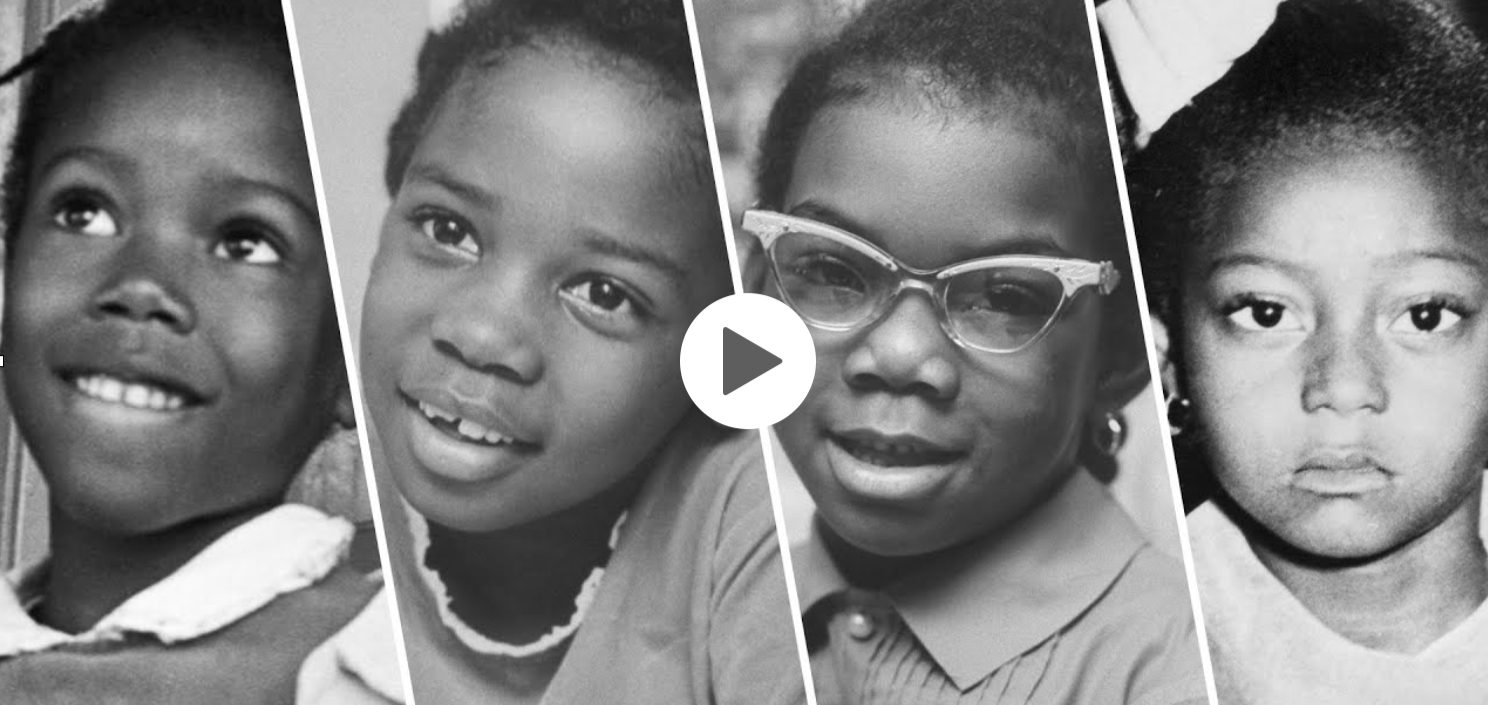
The New Orleans 4: right to a good education
This award honors children of courage, for instance, the courage of (left to right) Ruby Bridges, Leona Tate, Gail Etienne, and Tessie Prevost to stand up for positive change.
When 4 girls at 6 year olds entered 1st grade, they desegregated 2 New Orleans’ All-White public elementary schools. By being courageous, these girls opened up opportunities for children of color all over America. Bridges attended William Frantz Elementary School. Tate, Prevost, Etienne were at McDonogh 19 Elementary School
Angry parents pulled their children out of the 2 schools and the 4 girls spent a year being the only students escorted by federal marshals to and from their schools as they faced intense mobs and racial hostility.
All of their heroic civic actions were monumental steps forward for equality after the Supreme Court case, Brown v. Board of Education. That ruling ended the ‘separate but equal’ education of Black people and White people and led to the integration of all public schools. –
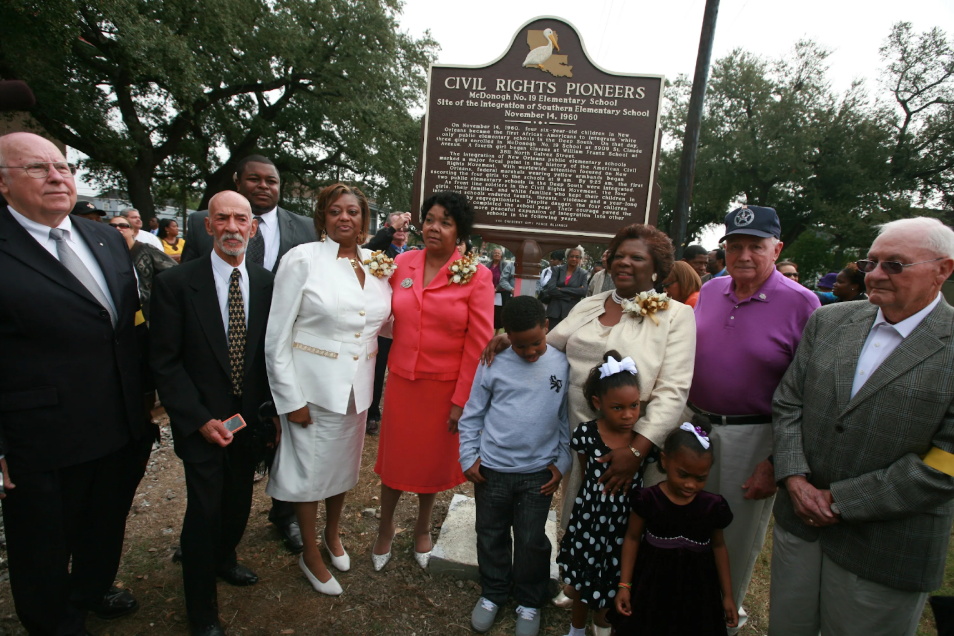
Leona Tate, Gail Etienne, and Tessie Prevost (above, center), civil rights pioneers were flanked by the marshals who accompanied them to school during a ceremony highlighting this important site in New Orleans. Plessy & Ferguson is commemorating sites from African American history on an emerging Reconstruction Civil Rights trail in New Orleans.
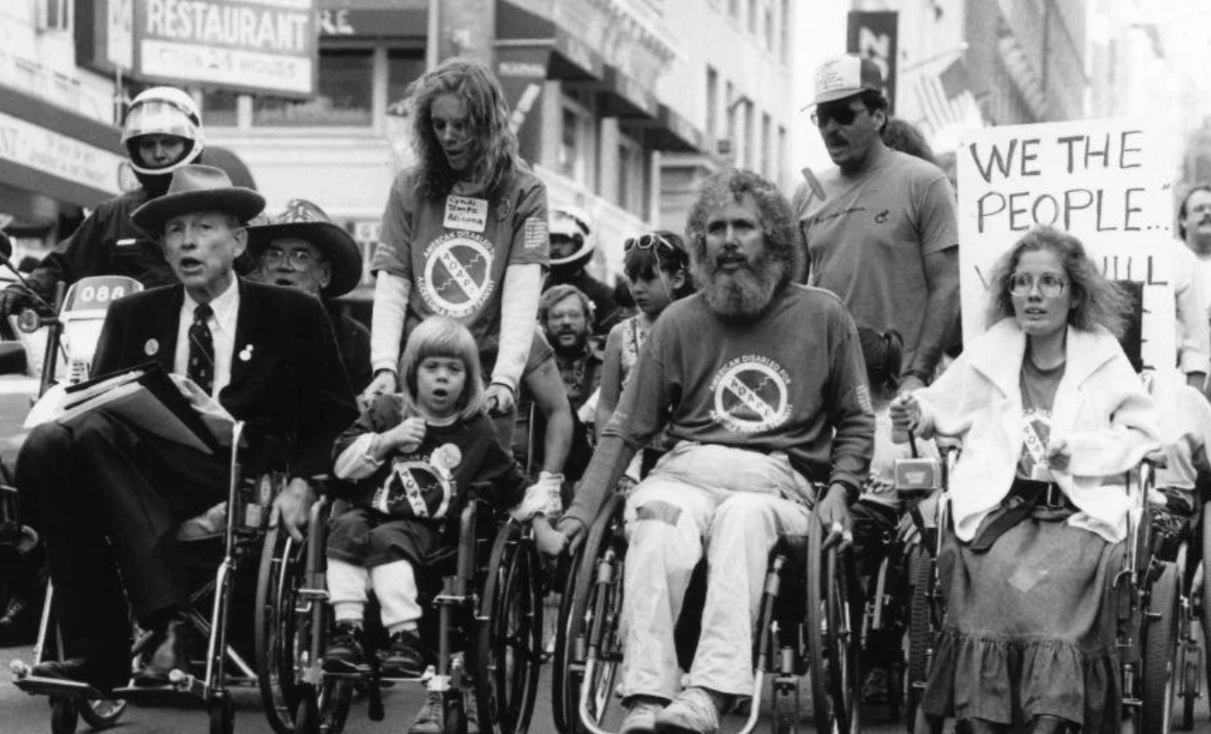
Jennifer Keelan was born with cerebral palsy and started protesting to get accessibility for people with disabilities at the age of 4 (above in wheel chair).
In 1987, 8 year old she crawled all the way up the Capitol stairs unassisted to make her point. Today she is a motivational speaker and co-author of the children’s book All the Way to the Top.
Jennifer Keelan: rights of the Disabled
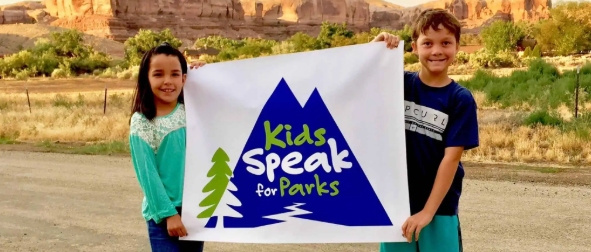
Robbie, 9, spoke to a crowd of over 7,000 people in front of the Utah State Capitol Building. He was on a mission to save America’s parks and monuments for future generations, informing the crowd specifically about the preservation of the Bears Ears National Monument, a 1.35 million acre protected area in Utah. President Obama had proclaimed it a national monument in 2016. In 2017 however, Bears Ears was once again at risk causing Robbie to use his voice courageously to help protect it.
Robbie Bond, public lands advocate
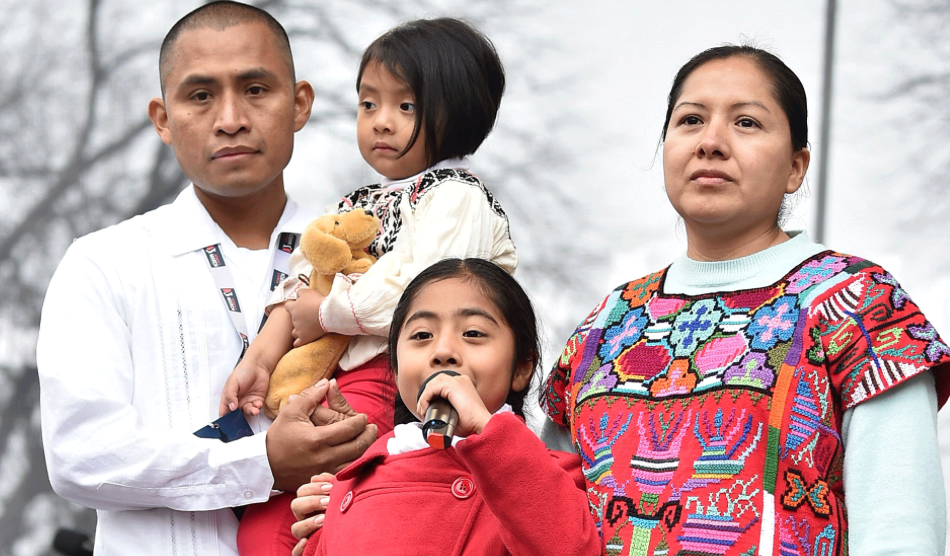
Sophie, 6, captured headlines around the world when the California-born girl ran from behind barriers on the National Mall in 2015 to deliver a letter to Pope Francis, calling on him to help prevent her parents from being deported. “I want to tell you that my heart is sad,” Sophie told him, reciting from memory the letter she had memorized in Spanish and English. “I would like to ask you to speak with the president and the Congress about legalizing my parents because every day I am scared that one day they will take them away from me.”
Sophie Cruz, human rights
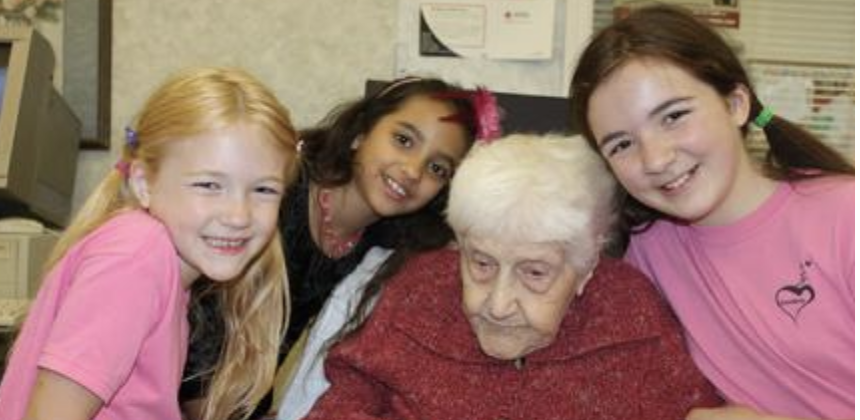
Abigail 10, lived in Stockholm, New Jersey. She visited her great grandmother in a nursing home regularly. But was upset by the general lack of visitors there. She loved to dance and sing so, undaunted she created a group called CareGirlz with 14 friends, ages 6-13, who also loved to sing, dance and act. They agreed to spend their free time visiting nursing and assisted living homes as well as hospitals, performing for the elderly all over New Jersey. CareGirlz, was a non-profit with the mission to “celebrate life singing and dancing at children’s hospitals, assisted living residences and nursing homes across the state.” She was named a Kid of the Year in 2011 by Parenting Magazine.
Abigail Lupi, caring for the elderly
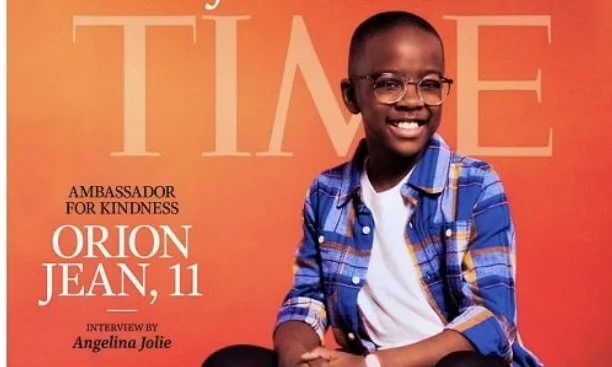
Orion, 11, from Fort Worth, Texas, is proof that age certainly can be just a number, particularly when it comes to charity work and giving back to his community in. In 2000 he saw himself as an ambassador for kindness—and collected and donated100,000 meals to food insecure families across the country. He also realized many kids don’t have books at home so he distributed 500,000 books to them. As a result, he’s was named TIME Magazine‘s 2021 Kid Of The Year.
Orion Jean, kindness ambassador
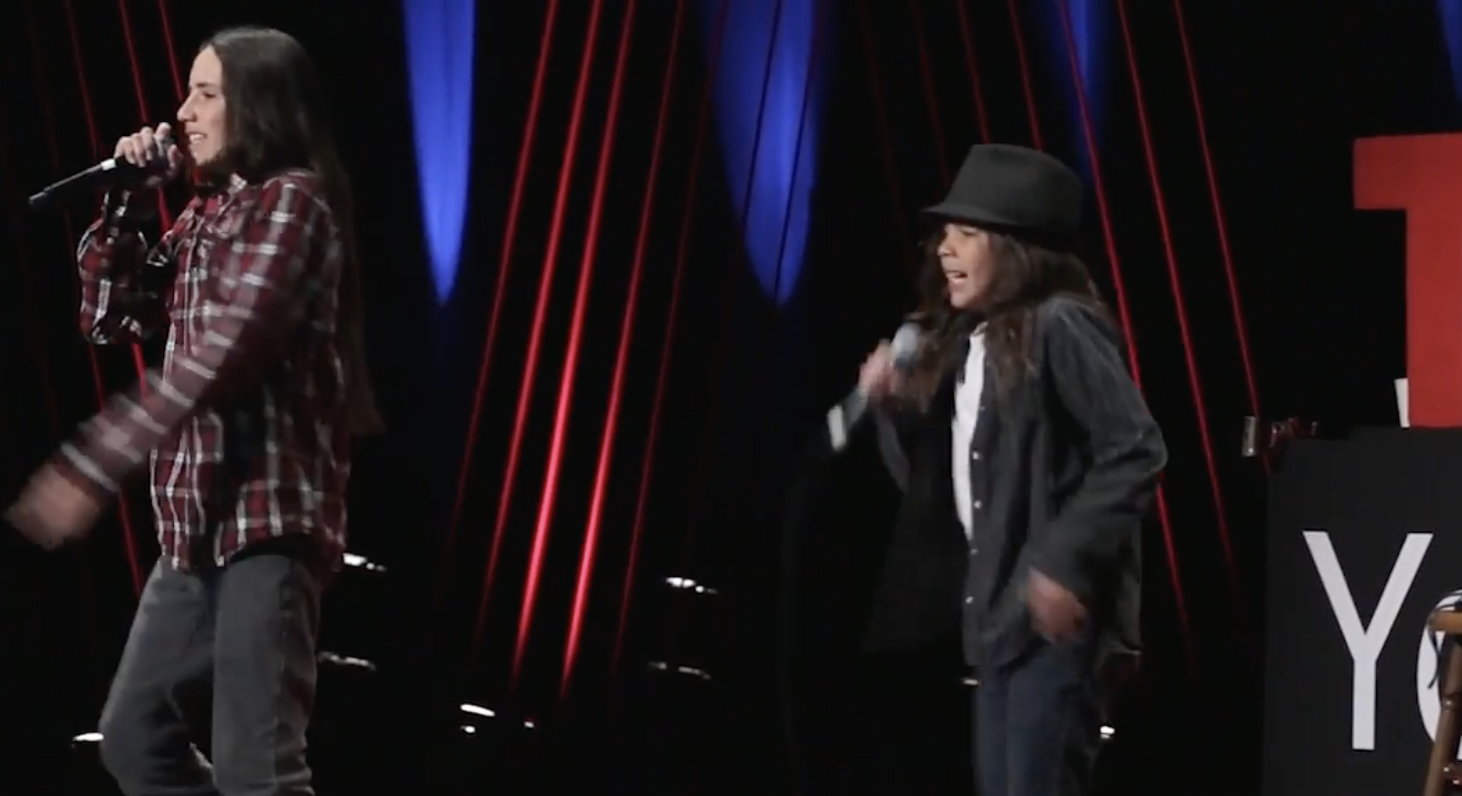
His first foray into activism was an appeal to a Colorado city council to prohibit pesticides in city parks. X was 9 years old. "I was like, yo, like let’s do something about this, so I called up my mom. I was like, yo, Mom, help me get a bunch of kids together to do something about this...And, like, we changed the law." X, as he called, and his younger brother Itzcuauhtli rapped about their message in this TEDX talk. X also spoke at the United Nations on environmental policy.
X was born in Colorado but his family moved to Portland, Oregon. He asserts that education and young people are key elements of the movement for significant social and environmental change: "The marching in the streets, the lifestyle changes haven't been enough so something drastic needs to happen.”
Xiuhtezcatl Martinez: eco activist and rapper
Acknowledgements and thanks from Inquiring Minds Institute to: Leona Tate; Gail Etienne; Tessie Prevost and Ruby Bridges; Phoebe Ferguson, Plessy & Ferguson; Sydney Moore, Ace Parsi, CivXNow; DemocracyReady NY, Wilson Riehl of the Inquiring Minds Institute Student Think Tank.